Nursing Considerations
- Schedule susceptible patients as the first case on the OR list.
- Identify any patient concerns and communicate them to the OR team.
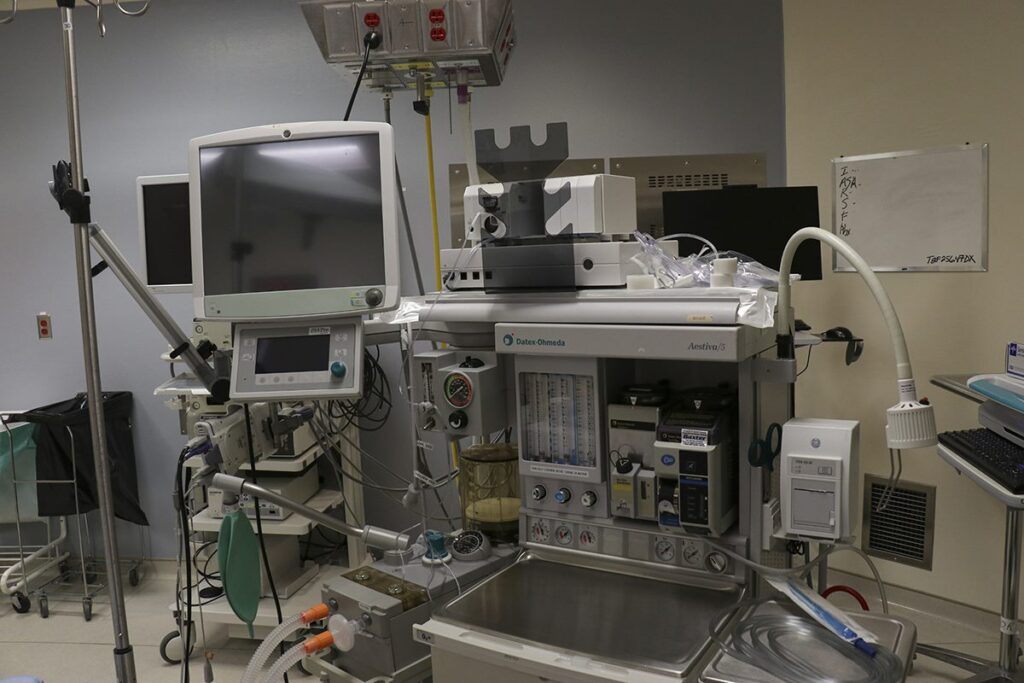
Ensure the patient is kept comfortable in the OR and minimize their anxiety when in the induction phase.
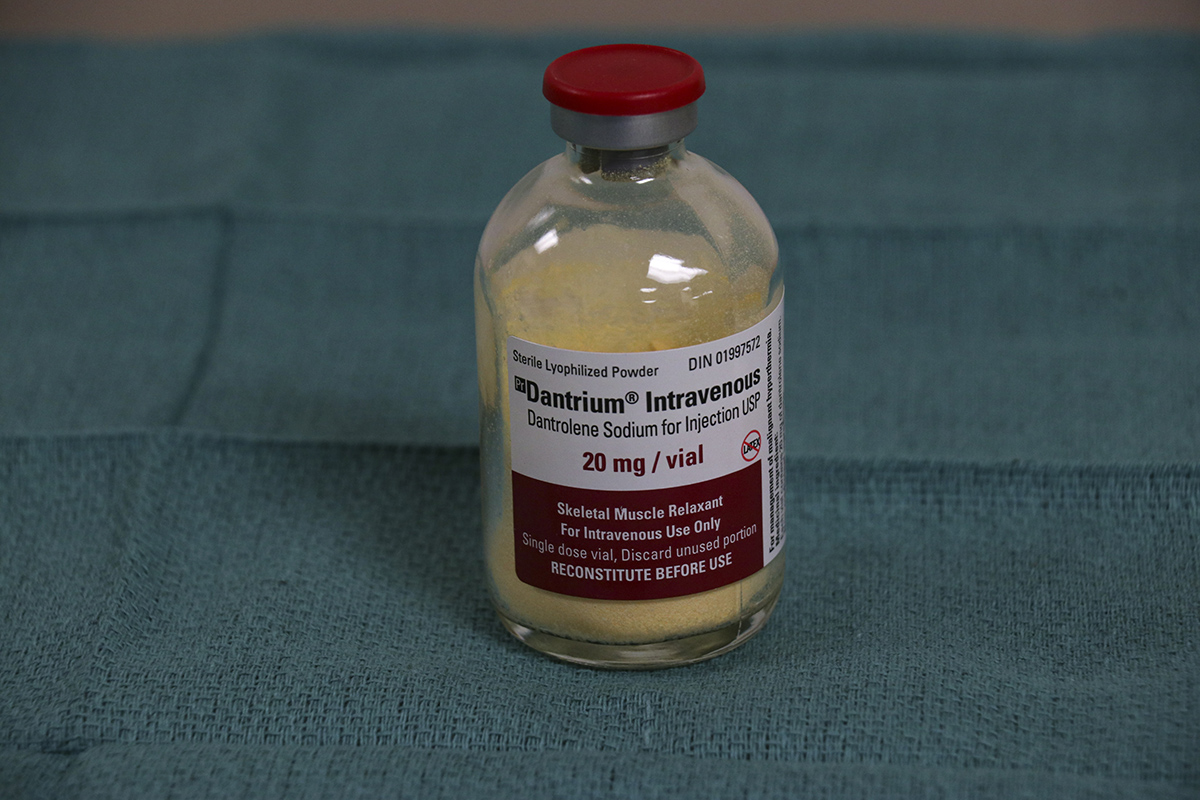
A ten-minute delay in administering Dantrolene can cause an increase in complications.
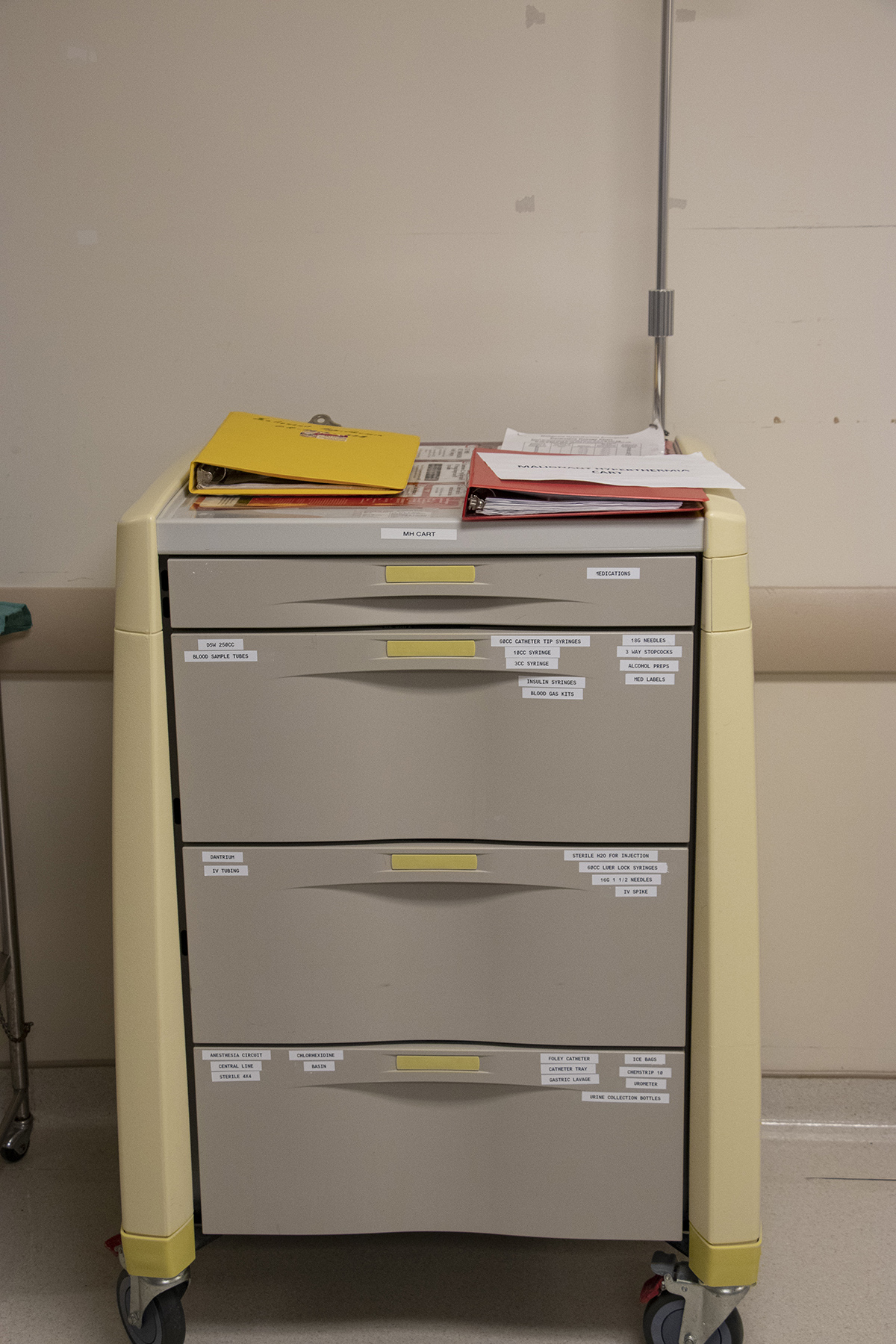
The nursing team should have the protocol and emergency MH cart readily available.
- The OR team should have easy access to methods for actively cooling the patient, such as ice packs and cold isotonic saline.
- The health care institution should provide annual education sessions for the management of MH.
- It is critical to respond to the MH situation from the time of onset. If an MH event occurs, be prepared to transfer the patient to the ICU. Ensure that communication has been made as soon as possible.
- The nurse should be prepared to call the North American MHAUS Hotline, which is available 24 hours a day, 7 days a week, all year.
(ORNAC 15th ed., 2021)
MHAUS Hotline
The Malignant Hyperthermia Association of the United States provides education and support to patients and health care providers dealing with MH and has a hotline available if help is needed during a crisis.
In US and Canada: 1 (800) 644-9737
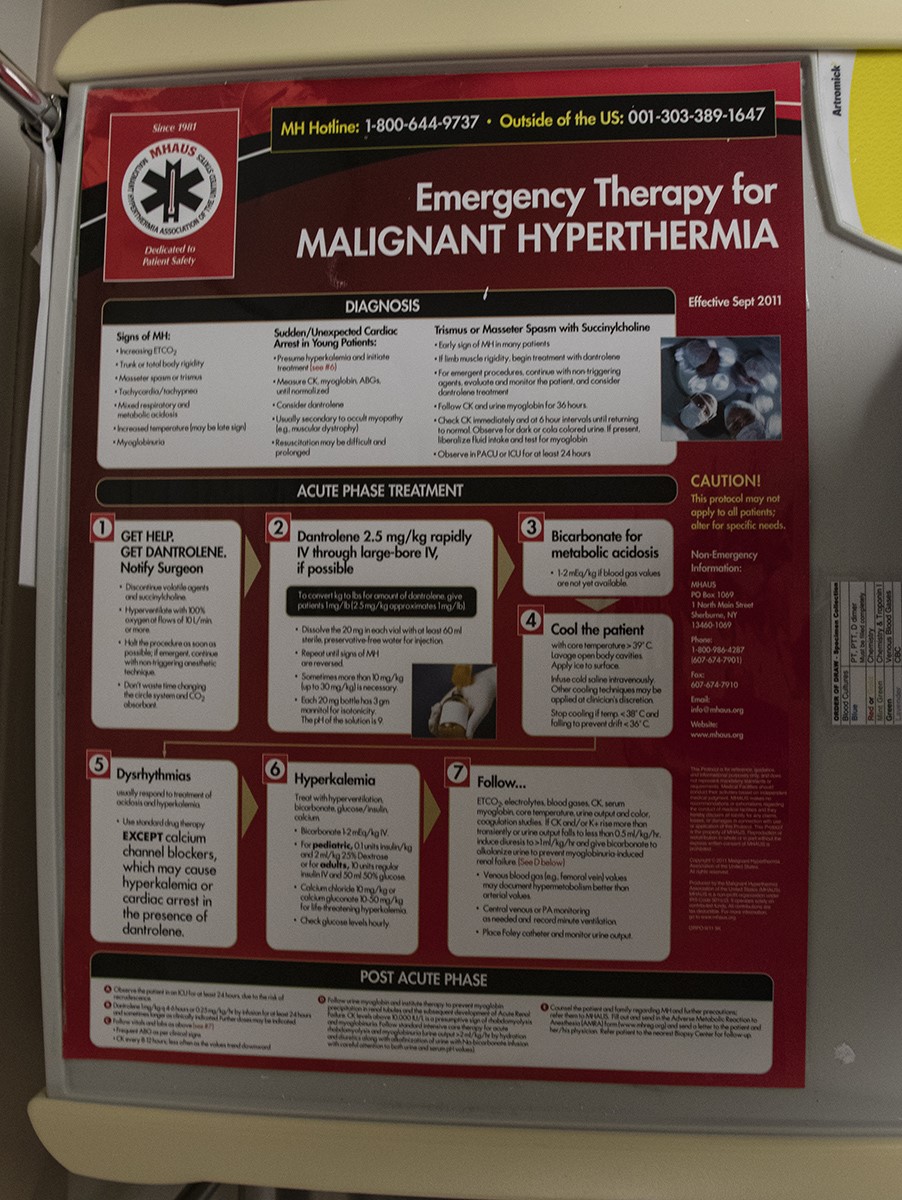
What To Do if a Patient Displays Signs and Symptoms of MH Intraoperatively
- The anesthesia provider stops the anesthetic gases and administration of succinylcholine and manages the anesthetics with non-triggering agents.
- The surgery stops. The patient’s incision may be closed or packed with sponges by the surgeon.
- The scrub nurse continues to support the surgeon.
- The circulating nurse should call for help, push the code button, and get the MH cart.
- The circulating nurse (or others who are available) should initiate preparation of Dantrolene.
- If the surgeon no longer needs assistance from the scrub nurse, the nurse may assist with the preparation of Dantrolene. They may obtain items needed such as IV pumps, the foley catheter, and items to cool patient down.
- The circulating nurse continues to support the anesthesia provider and be the recorder if no one is available.
- MHAUS may be contacted when more support is required by the anesthesia provider.
(ORNAC, 2021)
Summary
MH is a life-threatening condition that occurs when volatile anesthetics and succinylcholine are administered to a susceptible patient. Care for a susceptible MH patient is a collaborative effort. The nurses could participate in the process of ensuring that optimal patient care has been delivered through:
- Being in constant communication with the surgical team around the preparation of the OR room and the patient. They should address any concerns of the patient.
- Preparing the OR with equipment and supplies that are needed in the event of a crisis.
- Performing a thorough preoperative risk assessment and knowing the signs and symptoms of MH.
- Participating in education related to management of a patient in MH crisis.
- Being familiar with the preparation and administration of Dantrolene, side effects, and dosing (2.5mg/kg) of the medication.
📽️ AORN Cine-Med Video
Watch the AORN Cine-Med Video: Malignant Hyperthermia Crisis: Team in Action
This video provides a case study example of reacting to an MH crisis. The video asks you to pause and consider what to do in each situation. Make sure you use this time to think about how you would react.
- Malignant Hyperthermia
- Download the Study Guide to support your learning
- Runtime: 31 minutes
🧠 Graded Activity
In Blackboard, complete the Graded Activity: How will you react to a suspected MH crisis?